WELCOME!

Welcome to Le Beau Paon Victorien! I'm so glad you stopped by!

Here you will find a variety of things that might interest you: food, books, house decor, crafty things, random thoughts, dishes, gardening and more!

Spend some time with us and happy reading!


Wednesday, November 5, 2008

Vintage Voice: Tiffany Girls


Louis Comfort Tiffany's (1848-1933) designs have long been renowned for their artistry and fine attention to detail. Although many such pieces bear his name and represent his vision, he was not the sole force behind the creative process. Many people worked for him without receiving much recognition and one such person was Clara Driscoll.
Specializing in architectural decoration at the Metropolitan Museum Art School in New York City, Driscoll began her career with Tiffany Glass Co.(incorporated in1885) at the age of 26. Tiffany only employed un-married women and widows, so Driscoll left three times due to engagements and marriages, but during her three stints with the firm, she became one of the company's best designers. Her talent for designing the signature leaded-glass lampshades, bases and desk sets was evident in some of her most famous models, including the Dragonfly, Wisteria and Poppy designs.
The women she directed also played key roles in the company's success. At her prime, Driscoll managed 35 women in the women's glass-cutting department. The "Tiffany Girls" were well-suited for this type of work, with their nimble fingers, eye for detail and a penchant for decoration. Many of Tiffany's designs benefitted from a woman's touch. However, they were no strangers to the physical demands, particularly once they were able to cut their own glass.
Unfortunately, Driscoll's dedication and talent went largely un-noticed and the success of her designs resulted in resentment among co-workers. She endured many attempts by male workers to close her department, but she ultimately triumphed. Though forced to limit her staff, she was able to design all the lampshades and small luxury goods, including some windows and mosiacs.
Driscoll worked closely with Louis Tiffany, who was keenly aware of her capabilities and supported her decisions on both design and management matters. Her sensibilities extended beyond the studio; she felt very strongly about the condition of her female employees. Because they had to leave once they were married, Driscoll was always frustrated to lose workers, but even more so when they sacrificed their careers and salaries for less successful husbands. Ultimately, she too decided to end her employment and marry.
If you would like to read more about the Tiffany Girls, you can do so in the book, A New Light on Tiffany: Clara Driscoll and the Tiffany Girls, by Martin Eidelberg, Nina Gray and Margaret K. Hofer.

Monday, October 20, 2008

Painting Project Update: Final

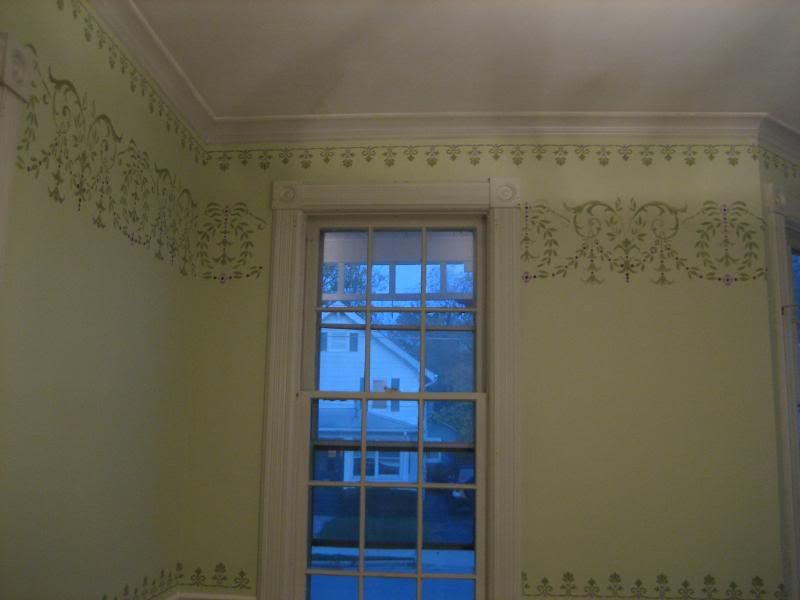
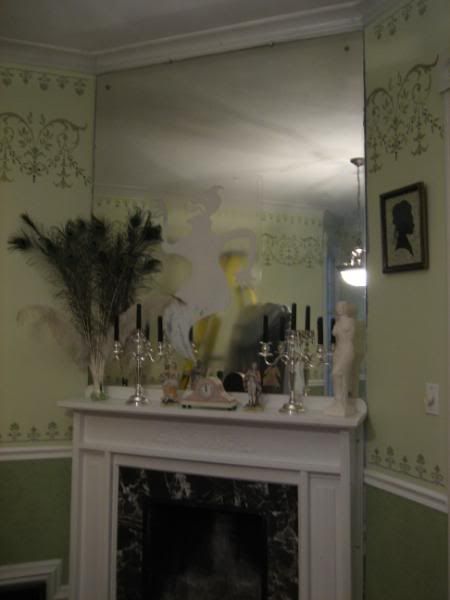
Transforming the formal parlor from blah to Victorian splendor!

Before photos: Dark blue and light blue walls.

Mid- painting:

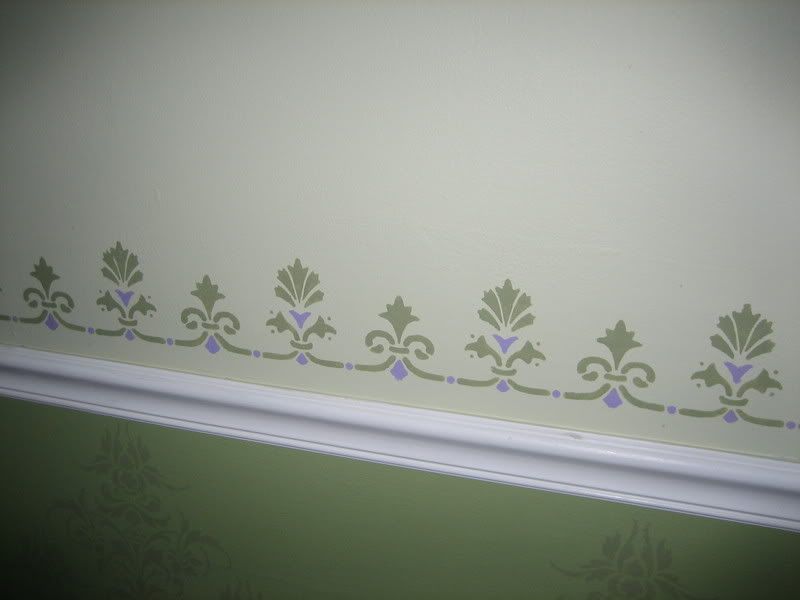
After painting walls new colors (Honeydew, top, and Great Green, bottom.)Stenciling Phase 1:
Border along chair rail


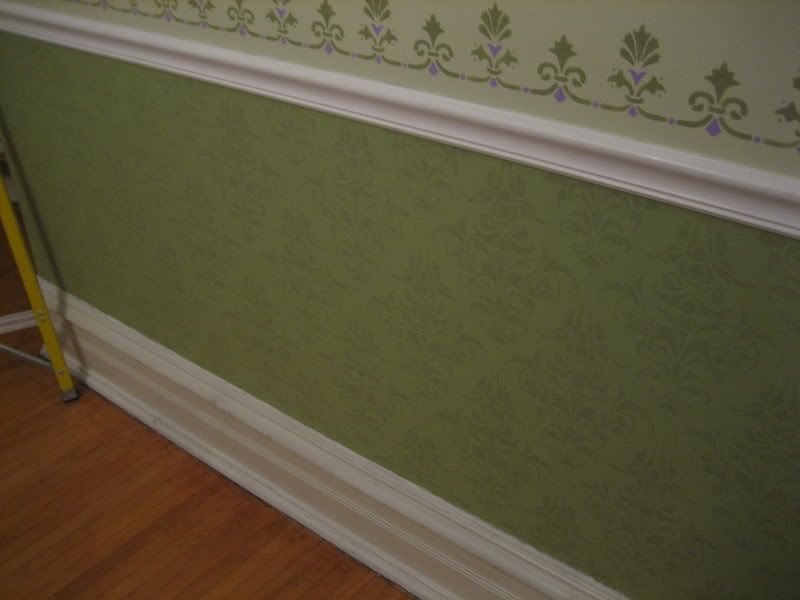
Stenciling Phase 2:
All-over damask pattern on wall below chair rail


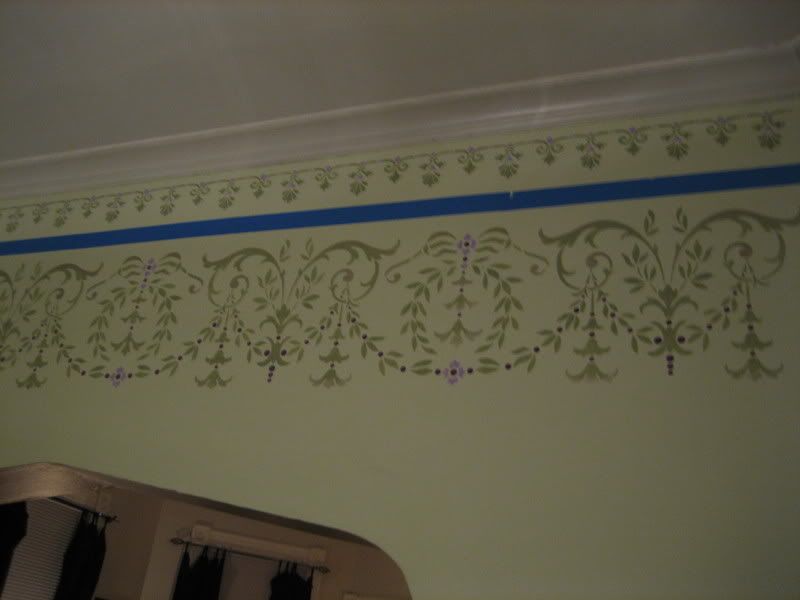
Stenciling Phase 2.5:
Inverted border along molding at the ceiling


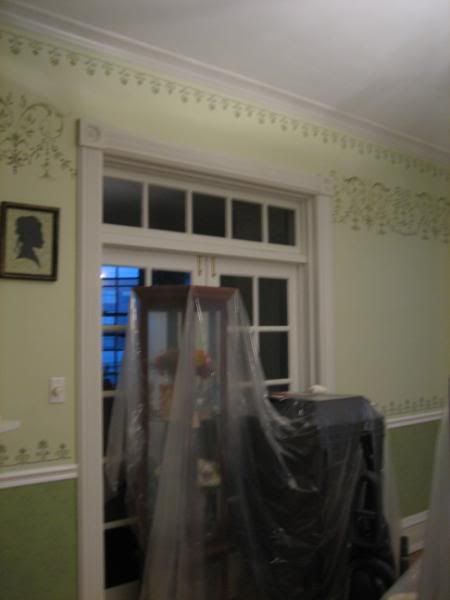
Stenciling Phase 3: Dado

Final Pictures: DONE!


Food: Halloween Cupcakes


In the spirit of the upcoming Halloween 'holiday', I made some Halloween cupcakes to take to work for a treat. These are just plain chocolate cupcakes with powdered sugar on top. I used mini stencils purchased from the Martha Stewart craft line at Michael's. Colored sugars, food coloring spray or cocoa powder could also be used.

Thursday, October 16, 2008

Vintage Voice: The First Electric Christmas Tree

In 1882 the first Christmas tree with electric lights was displayed in a Victorian home in downtown New York City. The homeowner was Edward Johnson, a vice president of the Edison Electric Light Company. Mr. Johnson did not approve of the wax candle trees that were popular at that time because of how dangerous they could be and how many serious fires they caused. Electricity was new and people were just becoming acquainted with it. He figured a tree with electric lights would be a lot safer, so he decided to devise electric lights for his own tree and display it in his home.

Mr. Johnson's innovative idea was not deemed newsworthy by the media, however, despite all the letters he mailed off to every single newspaper in the city. He invited the reporters to visit his home and view the tree, but not one member of the New York press showed up. In his letter, Johnson wrote, "Wax candle trees can only be lighted for an hour per night and must be watched carefully during that time. The chances of fire are great. Our electric tree will prove to be much safer and be kept glowing for several hours without fear of causing a blaze."

Johnson had worked with Thomas Edison, who had invented the light bulb only three years earlier. Naturally, he was upset when the New York press showed no interest in his electric tree. Fortunately, one reporter did show up. He happened to be a reporter from Michigan who was in New York visiting relatives during Christmas of 1882 and his name was Thomas Croffut.

Croffut sent back a story about the tree to his newspaper, the Detroit Post and Tribune. He wrote, in part, "I walked over beyond Fifth Avenue and called at the residence of Edward H. Johnson, vice president of Edison Electric Light Co. There, at the rear of the beautiful parlor, was a large Christmas tree presenting a most picturesque and uncanny aspect. It was brilliantly lighted by many colored globes about as large as an English walnut and was turning some six times a minute on a little pin box. There were about eighty lights on the tree. I need not tell you that the scintillating tree was a pretty sight; one can hardly imagine anything prettier."

Though he was ignored by newspapers in his own town, Johnson did not give up. He placed an ad in all of them, inviting New Yorkers to visit his home during the holiday season. Hundreds did and the idea of having an electric tree, instead of a wax candle one, soon became all the rage.