In 1882 the first Christmas tree with electric lights was displayed in a Victorian home in downtown New York City. The homeowner was Edward Johnson, a vice president of the Edison Electric Light Company. Mr. Johnson did not approve of the wax candle trees that were popular at that time because of how dangerous they could be and how many serious fires they caused. Electricity was new and people were just becoming acquainted with it. He figured a tree with electric lights would be a lot safer, so he decided to devise electric lights for his own tree and display it in his home.
Mr. Johnson's innovative idea was not deemed newsworthy by the media, however, despite all the letters he mailed off to every single newspaper in the city. He invited the reporters to visit his home and view the tree, but not one member of the New York press showed up. In his letter, Johnson wrote, "Wax candle trees can only be lighted for an hour per night and must be watched carefully during that time. The chances of fire are great. Our electric tree will prove to be much safer and be kept glowing for several hours without fear of causing a blaze."
Johnson had worked with Thomas Edison, who had invented the light bulb only three years earlier. Naturally, he was upset when the New York press showed no interest in his electric tree. Fortunately, one reporter did show up. He happened to be a reporter from Michigan who was in New York visiting relatives during Christmas of 1882 and his name was Thomas Croffut.
Croffut sent back a story about the tree to his newspaper, the
Detroit Post and
Tribune. He wrote, in part, "I walked over beyond Fifth Avenue and called at the residence of Edward H. Johnson, vice president of Edison Electric Light Co. There, at the rear of the beautiful parlor, was a large Christmas tree presenting a most picturesque and uncanny aspect. It was brilliantly lighted by many colored globes about as large as an English walnut and was turning some six times a minute on a little pin box. There were about eighty lights on the tree. I need not tell you that the scintillating tree was a pretty sight; one can hardly imagine anything prettier."
Though he was ignored by newspapers in his own town, Johnson did not give up. He placed an ad in all of them, inviting New Yorkers to visit his home during the holiday season. Hundreds did and the idea of having an electric tree, instead of a wax candle one, soon became all the rage.


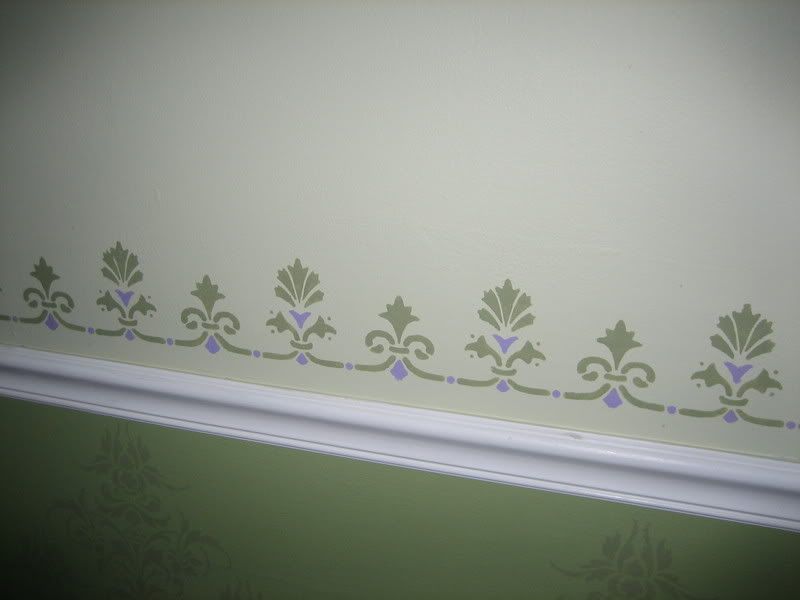
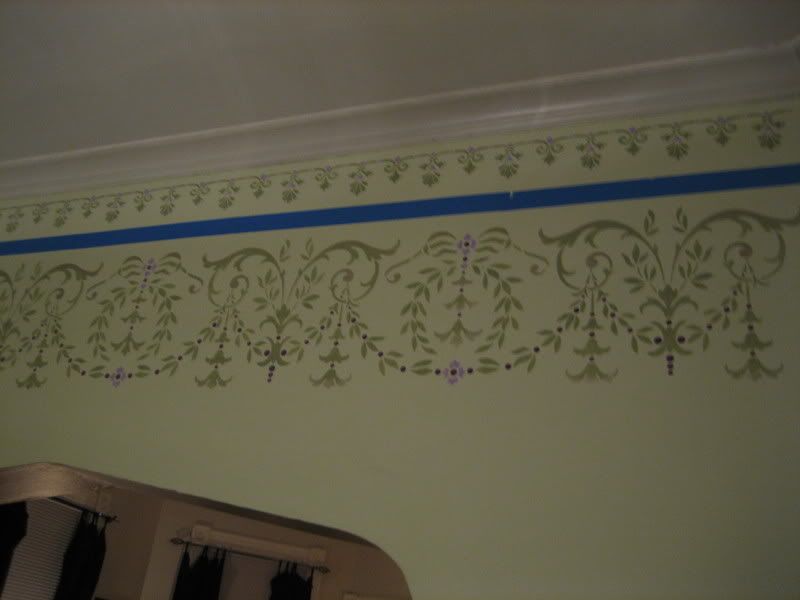
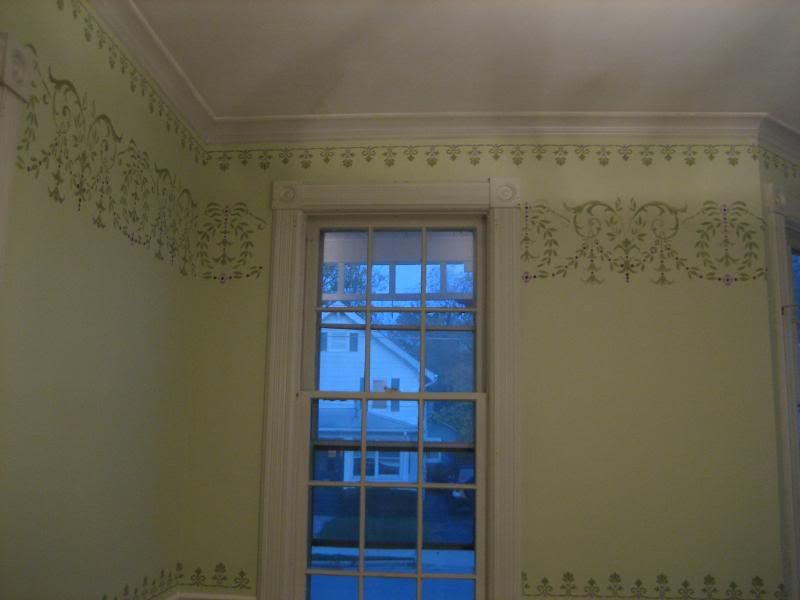
 Stenciling Phase 1: